

‘One day, in Dantewada too the dead will begin to speak. And it will not just be dead humans, it will be the dead land, dead rivers, dead mountains, and dead creatures in dead forests that will insist on a hearing.’ – Arundhati Roy, Capitalism: A Ghost Story (2015)
This post is a call for participants for a creative session at the International Critical Management Studies Conference 2025, 18-20 June in Manchester, UK. The conference theme is ‘Regenerative Critical Management Studies’.
Event Description
Who and what has died to enable CMS to live? What haunting ghosts must we compost in order to grow something new? The natural process of regeneration requires that what comes before is, though decay and transformation, turned into fuel and fertilizer. However, in contemporary late digital capitalism, there is a persistent refusal to either slow down, turn around, or sit with that which is decaying or passing away, and acknowledge the impact of this on the present and future. History is often called upon only to undergird future ambitions, not stayed with, nor dwelt upon long enough for us to process and integrate its knowledge and lessons. As such, the important human task of memory-keeping is marginalised, disrupting and denying the relationship between the past and the present, not to mention the future.
Emergent work in hauntological pedagogies (Nathan Tanner, 2022) and on the ‘ghostly’ nature of race (Karkazis & Jordan-Young, 2020) explores how systems of power relations can be ghostlike in their ability to shape the present in subtle yet material ways, relying on an ignorance or mischaracterisation of the facts of history to do so. At the same time, the speed at which the news cycle, global war machine, and climate catastrophe race ahead, plus the sheer volume and seemingly endless nature of the brutal tragedies and losses – human, animal, and planetary – to which we have become witness (Roy, 2015), inhibit our ability to feel our emotions, and especially the multi-faceted grief which, when stuck in our bodyminds, results in systemic illness. A facilitated and collective process of naming, unpacking, feeling and processing can enable consciousness around these issues to be formed, so we can shift our collective energies, and attention.
This proposed in-person session offers conference participants a dedicated space and ritualised container to remember, reflect upon what is haunting us, and grieve that which has been lost, died or passed away in order for such a thing as ‘critical management studies’ to first, exist, and second, be regenerated through the process upon which the conference attendees are collectively embarking. As meaning making beings, humans understand ritual in a felt sense, as a language that speaks without words (Weller, 2015). Therefore, this session will be organised as an ‘open mic grief tending ritual’, loosely based on two traditions: that of the grief tending rituals of the Dagara People of Burkina Faso (Some, 1997), and that of contemporary open mic poetry events and poetry slams. It will incorporate carefully facilitated opening and closing of the circle, rhythmic music and movement, and short and longer sharing segments for participants to contribute their own thoughts and creative products. The agenda for the session will go something like this:
| 10 min – Drop in and get grounded, with rhythmic music |
| 10 min – Calling in and building a container of support |
| 10 min – Short sharing in large group |
| 5 min – Move the emotions through – energetic music and movement |
| 40 min – Open Mic – 2-3 min time limit (depending on attendee numbers) |
| 5 min – Move the emotions through – energetic music and movement |
| 10 min – Reflective Sharing and close |
The session aligns with the theme of Regenerative Critical Management Studies in an anti-racist and decolonial way, by insisting upon the relevance of history, hauntings, the past, and the dead, to our contemporary discussions of academia’s role in late-stage digital capitalism. It asserts that we cannot challenge systemic inequities, persistent neocolonialism and corporate imperialism, nor create new possibilities for a better future, without accounting for and grieving our losses. We will treat haunting, death, loss and grief as the shared and collective experience that is our birthright, resisting the neoliberal individualism of self-care with a model of community care and composting, which is fundamental to building a generative seedbed for a renewed CMS community.
Call for Participants
CMS cannot regenerate without first composting what is now passing away. This creative session calls for participants interested in collectively reflecting and sharing on the below prompts:
- Who or what should the CMS community remember?
- What grief do you bring to be composted? OR What do the dead insist must be heard?
To express your interest, please complete this MS form by 31 January 2025 with your name, contact info, relationship to CMS community, why you would like to attend, and your responses to the prompts above. Responses will be seen only by the convenor and will remain confidential.
Please don’t feel obliged to offer extensive detail, but only initial reflections that will allow the convenor to understand your reasons for attending, what you wish to contribute to the space, and what accommodations may be required. Criteria for inclusion will be focused on relevance and engagement with the aims of the session, maximising safety of the space, and increasing diversity of perspectives represented.
The convenor will contact all interested parties to advise whether or not they are invited to participate, and offer further joining instructions.
About the Convenor
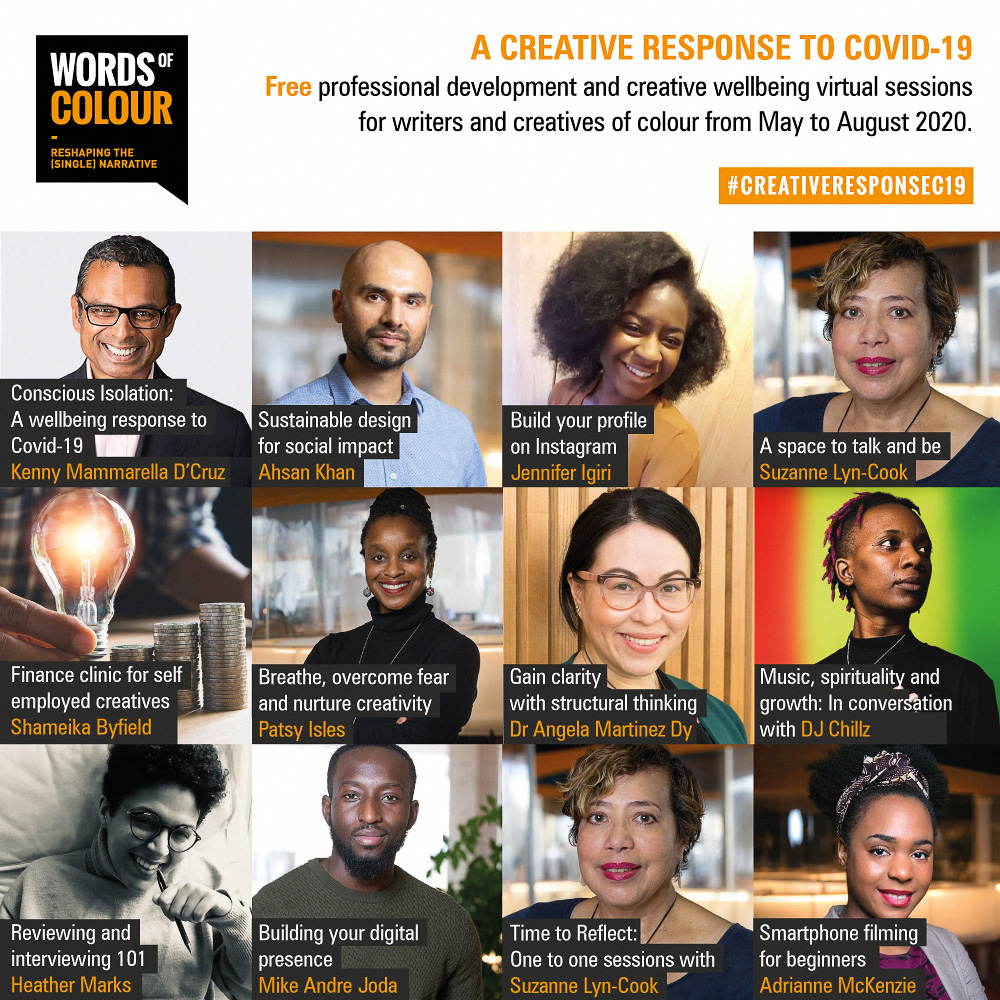
Dr Angela Martinez Dy (she/her) is an entrepreneurial community builder invested in liberatory unlearning. As a Senior Lecturer in Entrepreneurship at Loughborough University London, her expertise, research interests and communities of practice revolve around digital entrepreneurship, anti-racist intersectional cyberfeminism, and critical realist philosophy. A poet and scholar-activist with a track record of creating impact through community-based initiatives, collaborations, organisational formation and development, Angela is a queer immigrant woman belonging to Filipinx diaspora. She writes at Mangrove Road.
References
Karkazis, K., & Jordan-Young, R. (2020). Sensing Race as a Ghost Variable in Science, Technology, and Medicine. Science Technology and Human Values, 45(5), 763–778. https://doi.org/10.1177/0162243920939306
Nathan Tanner, M. (2022). Hauntological Pedagogies: Confronting the Ghosts of Whiteness and Moving towards Racial and Spiritual Justice. Religions, 13(1). https://doi.org/10.3390/rel13010083
Roy, A. (2015) Capitalism: A Ghost Story. London: Verso.
Some, M. P. (1997). Ritual: Power, Healing and Community. Penguin.
Weller, F. (2015). The Wild Edge of Sorrow: Rituals of Renewal and the Sacred Work of Grief. North Atlantic Books.
 Dr. Angela Martinez Dy