Please see below a call for papers for an edited book entitled ‘Feminist Beginnings: Being an Early Career Feminist Academic in a Changing Academy’, to be edited by Dr Rachel Thwaites and Dr Amy Godoy-Pressland. Please circulate around your networks.
In a fast-changing higher education academy, where marketisation is increasingly becoming the dominant model, the pressures on academics seem great, while the need to ‘play the game’ to succeed has never been more important. Within this context, entering the academy as an early career academic presents many challenges, as well as possibilities. Moving from the relative autonomy, and often bubble of safety, of the PhD into teaching or research contracts where there may be less flexibility and freedom within the institutional hierarchy, can be a real step change. Early career academics also frequently face the prospect of working on fixed term contracts, with little security and no certain prospect of advancement, while constantly looking for the next contract.
Being a feminist early career academic adds a further layer; how does one maintain one’s feminist identity and politics within what has traditionally been a very male-dominated institution where few women reach the most senior positions? Moreover the ethos of the marketising university where students are sometimes viewed as ‘customers’, may sit uneasily with a politics of equality for all. Feminist values and practice can provide a means of working through the challenges, but may also bring complications. As feminist researchers and teachers ourselves, we feel the impact of trying to live out a feminist politics provides another set of priorities which affect the way one thinks about the everyday and overarching experience of an academic career. This political outlook can lead to transformative events, but can also raise difficulties when in a non-feminist department or a research climate which does not take gender seriously.
This edited volume will thus explore the early years of an academic career from a feminist perspective and should appeal to students and academics at all stages of their careers. We therefore welcome contributions which provide findings from research studies, theory pieces, and experiential/personal pieces. The format of these is open to some interpretation and we will accept pieces of up to 3000 words for a personal piece and up to 8000 words for a theory/research paper on themes including, but not limited to:
* Being a feminist in higher education
* Moving from a women’s/gender studies centre into the wider academic community
* Maintaining your feminist identity
* Feminism in the curriculum and in the classroom
* Negotiating the academic hierarchy as an early career feminist
* Building a feminist support network
* The academic ‘lifestyle’: how to be an ‘academic’
We define ‘early career’ as those within five years of having been awarded their PhD and ‘higher education’ as any university setting. We are actively seeking contributions which will provide a wide international perspective, however they must be written in English.
To submit an abstract (300-400 words), or for any queries, please contact either Dr Rachel Thwaites, or Dr Amy Godoy-Pressland
Deadline for Abstracts: 5th December 2014 (decision to be made by 6th February 2015)
Provisional date for full article: 7th September 2015

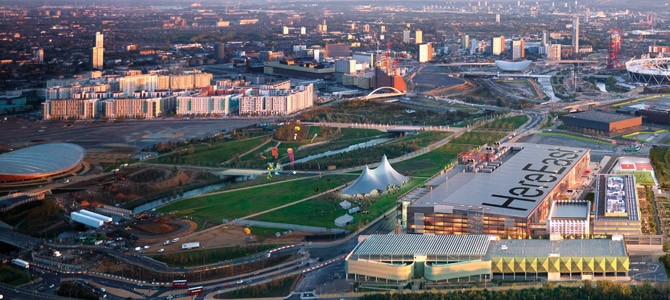 Happy to report that as of 1st September 2015 I will be employed as a Lecturer in Entrepreneurship at the Glendonbrook Centre for Enterprise Development at Loughborough University and primarily based at their new campus in London. I’ll be teaching contemporary entrepreneurship theory and practice to a cohort of MSc students from across a variety of disciplines. I am very excited about this new opportunity and will be looking forward to sharing my experiences with you all.
 Dr. Angela Martinez Dy